

The World Cup is finally here, and across Naperville, fans are gathered at local favorites like Quigley’s Irish Pub or settled onto their couches, ready for 90 minutes of high-stakes drama. But for many, there’s a frustrating trend: by the time the halftime whistle blows, the eyelids are getting heavy. You aren't just bored, and you aren't just "getting older."
If you find yourself nodding off during the most anticipated matches of the year despite getting a decent night's sleep, your body might be trying to tell you something. Deep, persistent fatigue that hits right when you should be most excited is a classic red flag for something deeper. We are seeing an increase in patients seeking hormone imbalance treatment in Naperville, IL, because they are tired of missing out on life’s best moments.
You’re not "just tired," what halftime exhaustion is really telling you
We often dismiss fatigue as a byproduct of a busy Illinois lifestyle. We blame the commute, the kids, or the stress of the job. However, there is a fundamental difference between being sleepy and being hormonally depleted.
The difference between normal tiredness and hormonal fatigue
Normal tiredness usually resolves after a good night’s sleep or a relaxing weekend. According to MedlinePlus, Fatigue, on the other hand, is a lingering tiredness that is not relieved by rest. When your hormones are out of whack, your "battery" never truly recharges. You might wake up feeling just as exhausted as when you went to bed, leaving you with zero "fuel" left in the tank by the time the afternoon matches kick off.
Why World Cup late nights expose what your body has been quietly hiding
Events like the World Cup often disrupt our routine. Late-night broadcasts or early-morning kick-offs put a spotlight on your body’s inability to recover. A healthy endocrine system can handle the occasional late night; a compromised one cannot. If one late game leaves you feeling "zombie-like" for three days, it’s a sign that your underlying hormonal foundation is struggling to maintain homeostasis.
What hormones actually control your energy and what happens when they fall
Think of your hormones as the chemical messengers that tell your body how to produce and use energy. When these messengers get lost, your metabolism and stamina take a direct hit.
Testosterone and energy: what low T does to men over 30
For men, testosterone is the primary driver of vitality, muscle mass, and mood. According to the NIH, testosterone levels naturally decline with age, but a significant drop can lead to "Low T." This isn't just about libido; it manifests as a profound "halftime" crash, where you simply lose the drive and physical energy to stay engaged.
Estrogen, progesterone, and the crash women in perimenopause know too well
Women often face a more complex hormonal rollercoaster. During perimenopause and menopause, fluctuating levels of estrogen and progesterone can wreak havoc on energy. The National Institute on Aging notes that these shifts can cause sleep disturbances and "brain fog," making it nearly impossible to focus on a fast-paced soccer match after a long day of work.
Cortisol and thyroid, the overlooked hormones draining your stamina
NIH states that your thyroid gland acts as the body's thermostat and furnace. If it’s sluggish (hypothyroidism), everything slows down, including your heart rate and energy production. Similarly, MedlinePlus states that cortisol, your "stress hormone," should peak in the morning and taper off. If your cortisol rhythm is broken, you might feel "tired but wired" at night, yet completely spent by 3:00 PM.
Why summer makes hormone imbalance feel so much worse
As the Illinois humidity rises, so does the strain on a hormonally imbalanced body. Summer isn't just about heat; it's a physiological challenge.
Heat, broken sleep, and the hormone spiral that follows
High temperatures make it harder for the body to regulate its internal clock. Hormones like melatonin, which governs sleep, are sensitive to temperature shifts. If you are already struggling with hormone imbalance treatment in Naperville, IL, the added stress of a 90-degree day can lead to poor sleep quality, which in turn further depletes your testosterone or estrogen levels.
How an Illinois summer stacks against you when your hormones are already off-balance
Living in the Midwest means dealing with rapid pressure changes and high humidity. This environment forces your adrenal glands to work harder to maintain balance. For someone with healthy hormones, this is a minor adjustment. For a Naperville resident with a thyroid or adrenal issue, it’s an exhausting uphill battle that makes watching an outdoor game feel like a marathon.
Is your fatigue a hormone problem? Signs most people brush off
Many people wait until they can barely function before seeking help. Recognizing the early "whispers" of hormone imbalance can help you get back in the game sooner.
Signs in men that point to a hormone imbalance
Unexpected weight gain: Specifically around the midsection.
Irritability: Feeling "shorter" with friends or family during the game.
Loss of muscle tone despite hitting the gym or staying active.
Mental fatigue: Struggling to follow the tactical side of the match.
Signs in women that their hormones are asking for attention
Night sweats: Waking up drenched, even with the AC on high.
Anxiety: A racing heart that isn't just from a penalty kick.
Thinning hair or dry skin: Signs that the thyroid or estrogen is dipping.
Heavy or irregular cycles: A major drain on iron and energy levels.
The brain fog, low mood, and weight gain connection
Hormones don't just affect your muscles; they affect your brain. According to the NIH, Hypothyroidism and low testosterone are frequently linked to "brain fog," that feeling like your head is filled with cotton. When you combine this with the weight gain often caused by a slowed metabolism, it’s no wonder you’d rather nap than cheer.
Ready to watch the full 90 minutes? Book your hormone consultation in Naperville
Don't let another season pass you by from the sidelines of your own life. If you are struggling to stay awake for the things you love, it's time to investigate the "why" behind your fatigue. Our team at Naperville Health & Wellness Clinic is dedicated to helping you find balance and regain your edge.
Call us at (877) 885-8784 to schedule your session or learn more.
Follow us on Facebook and Instagram for wellness tips, exclusive offers, and updates on our latest treatments!
FAQs
1. How do I know if my fatigue is just stress or a hormone issue?
If your fatigue persists even after reducing stress and getting 7–8 hours of sleep for several weeks, it is likely physiological. A simple blood test can confirm if hormones are the culprit.
2. Is hormone therapy safe?
Yes, when managed by experienced medical professionals. Hormone therapy should be tailored to the individual's needs and monitored closely to ensure the lowest effective dose is used.
3. Does insurance cover hormone imbalance treatment in Naperville, IL?
Many diagnostic tests are covered by insurance. Coverage for specific treatments varies by plan. Our office can help you navigate your benefits during your first visit.
4. Will I have to stay on hormone therapy forever?
Not necessarily. Some patients use therapy to bridge a difficult transition (like menopause), while others with chronic deficiencies (like Low T or Hypothyroidism) may choose long-term treatment to maintain their quality of life.
5. Are there natural ways to balance hormones?
Diet, exercise, and stress management are vital. However, if your body has stopped producing adequate levels of a hormone, lifestyle changes alone may not be enough to restore optimal function.
6. Can younger people have hormone imbalances?
Absolutely. While more common with age, factors like extreme stress, certain medications, and underlying health conditions can cause imbalances in your 20s and 30s.
Related Articles
World Cup watch party hangover? IV recovery drip has you back in 60 minutes
Don't let a 90-minute match ruin your next 24 hours. If sports drinks and coffee aren't cutting it after a World Cup watch party, it’s time for a medical-grade reset. Our Hangover IV Drip in Naperville bypasses the digestive system to deliver 100% absorption of electrolytes, B-vitamins, and anti-nausea meds getting you back on your feet in just one hour.
Read MoreIPL and sun damage: What World Cup summer sun is going to do to your skin
Cheering on your team at an outdoor watch party this summer? The World Cup excitement is high, but so is the UV index. Discover how invisible UVA/UVB rays are affecting your skin right now and why IPL (Intense Pulsed Light) is the ultimate "reset button" for Naperville residents looking to erase summer sunspots and redness.
Read More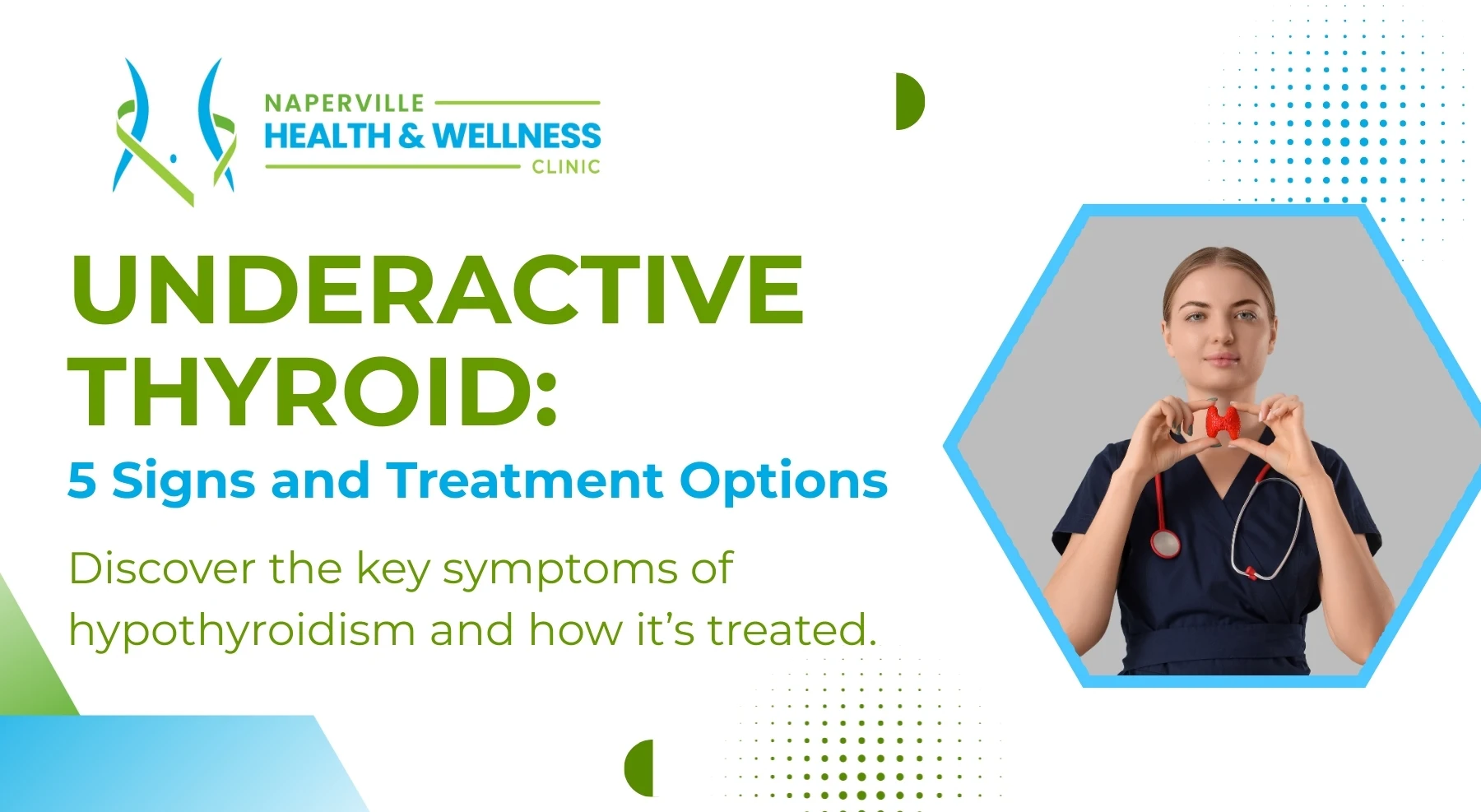
What Is Thyroid Treatment? 5 Signs of an Underactive Thyroid
Thyroid treatment helps manage hypothyroidism, a condition where your thyroid doesn't produce enough hormones. Here are 5 signs to watch for and how treatment can help.
Read MoreReady to Take the Next Step?
From medical weight loss and semaglutide to IV infusions and aesthetic treatments, our Naperville clinic offers comprehensive health and wellness services tailored to your goals.