
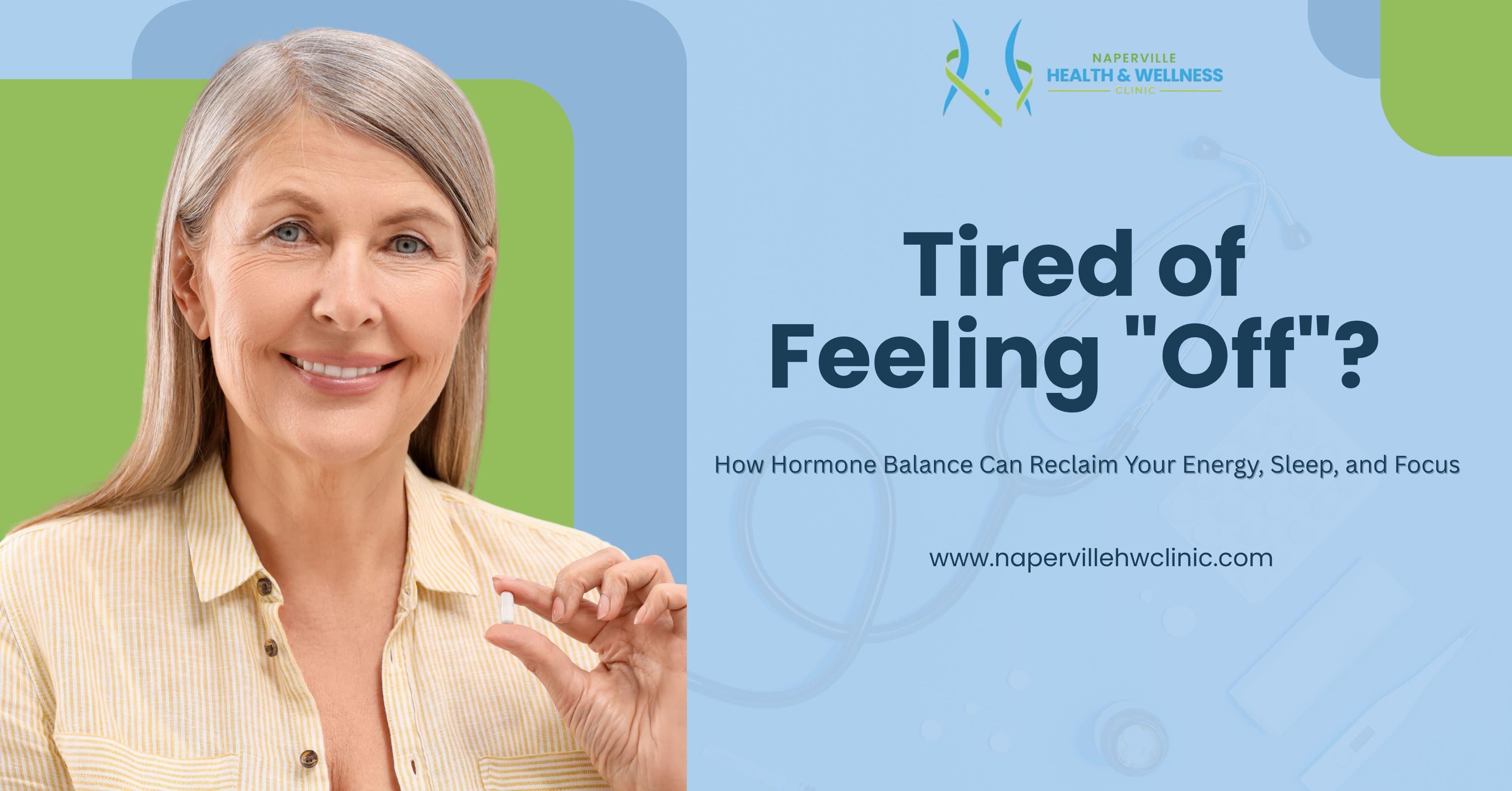
Persistent fatigue that coffee can't fix. Irritability that strains relationships. Brain fog that impacts your productivity at work. Unrelenting hot flashes that disrupt your sleep and your day.
For millions of people, these symptoms are a daily reality. Too often, they are dismissed as just "a normal part of aging" or an unavoidable consequence of a high-stress life.
But while these symptoms are common, they are not necessarily normal, and you do not have to "just live with them."
Often, the root cause lies in a system you rarely think about until it's out of sync: your hormones. Hormones are the body's most powerful chemical messengers, regulating nearly every major bodily function.
What Are Hormones?
To understand hormone therapy, it's helpful to first understand hormones. In short, hormones are your body's chemical messengers. They circulate through your bloodstream, providing critical instructions to your organs and tissues.
Think of them as the body's internal communication network. For example:
Thyroid hormones act as the body's "gas pedal," setting the pace for your entire metabolism.
Insulin manages your blood sugar, telling your cells when to absorb energy.
Cortisol is your "stress hormone," managing your fight-or-flight response, inflammation, and blood pressure.
Estrogen, in addition to its reproductive role, impacts bone density, skin elasticity, and brain function.
Testosterone, crucial for both men and women, influences libido, muscle mass, bone strength, energy, and motivation.
When these signals are out of balance—too high, too low, or produced at the wrong time the body's functions can become impaired.
What Is Hormone Therapy?
Hormone Therapy (HT) is a medical treatment designed to restore optimal hormone levels. It involves supplementing or replacing the hormones your body is no longer producing in sufficient quantities or, in some cases, blocking the effects of overabundant hormones.
The goal is to relieve symptoms and, in many cases, to provide long-term preventative health benefits.
It is essential to understand that "Hormone Therapy" is not a single treatment. It is a highly personalized medical approach. The right therapy for one person is completely different from the right therapy for another. It must be carefully tailored to an individual's specific biochemistry, symptoms, health history, and goals.
Who Is Hormone Therapy For?
HT is a valuable treatment for several different patient groups. At our Naperville clinic, we most commonly see patients who fall into these categories:
1. For Menopause Relief (MHT):
This is the most widely known application of HT. As individuals enter perimenopause and menopause, the ovaries' natural production of estrogen and progesterone declines. This significant drop can lead to disruptive symptoms, including:
Hot flashes and night sweats (vasomotor symptoms)
Vaginal dryness, itching, and pain (vaginal atrophy)
Recurring urinary tract infections (UTIs) or urinary urgency
Sleep disturbances and insomnia
Mood swings, anxiety, or depressive symptoms
Brain fog and memory lapses
Joint pain and body aches
Menopausal Hormone Therapy (MHT) restores these hormone levels to alleviate symptoms. It is also an effective, FDA-approved treatment to prevent bone loss (osteoporosis).
We also understand the "timing hypothesis" research increasingly shows that the benefits of MHT are greatest and the risks are lowest when initiated within 10 years of menopause or before age 60.
2. For Low Testosterone in Men (TRT):
While "Low T" is a common marketing term, it refers to a real medical condition called hypogonadism, where the body does not produce enough testosterone. When clinically indicated, this can lead to:
Chronic fatigue and low energy
Decreased libido (sex drive)
Erectile dysfunction
Loss of muscle mass and strength
Increased abdominal fat
Depressed mood, irritability, and lack of motivation
Reduced bone density (osteopenia)
It's critical to note that TRT is a medical treatment for a diagnosed condition, not an athletic enhancement or a "fountain of youth" for 'low-normal' testosterone. A proper diagnosis at our Naperville clinic involves specific blood tests (usually taken in the morning) to confirm a consistent deficiency, paired with the presence of these symptoms.
3. For Gender Affirmation (GAHT):
For many transgender and gender non-conforming individuals, Gender-Affirming Hormone Therapy (GAHT) is a necessary and integral part of their healthcare. This therapy uses hormones (such as estrogen and anti-androgens, or testosterone) to help align a person's physical characteristics with their gender identity. It is a safe, medically supervised process aimed at improving well-being, reducing gender dysphoria, and is a key component of gender-affirming care.
The Modern Approach: Is It Safe?
This is often the first and most important question we hear. We often hear concerns about the safety of hormone therapy, many of which stem from older, misunderstood research.
Many of these concerns originate from the large-scale Women's Health Initiative (WHI) study from 2002. However, it's crucial to understand the context of that study: it involved an older patient population (many were over a decade past menopause) and used one specific, older formulation of hormones (oral estrogen combined with a synthetic progestin).
Modern, personalized hormone therapy is vastly different. Today, we have a much more nuanced understanding.
Personalization: We don't use a "one-size-fits-all" pill. Your plan is based on your lab results and your risk factors.
Application: We can use transdermal (skin-based) applications like patches or gels, which often bypass the liver and may reduce the risk of blood clots compared to oral pills.
Formulation: We have access to bioidentical hormones, including micronized progesterone, which has a different safety profile than the synthetic progestins used in the WHI.
Like any effective medical treatment, HT has both benefits and risks. Our job is to help you accurately weigh them. This is why a one-size-fits-all approach is not only ineffective but unsafe. At Naperville Health & Wellness, we start with comprehensive lab testing and a thorough review of your medical history to design a plan that is specific only to you.
How Is Hormone Therapy Administered?
Modern hormone therapy offers a variety of effective delivery methods. This allows us to choose the one that best fits your body, lifestyle, and preferences. Options include:
Gels or Creams: Applied topically to the skin. They are absorbed daily, providing steady hormone levels.
Patches: Worn on the skin and changed once or twice a week. This method bypasses the liver, which can reduce the risk of blood clots for some patients.
Pills: The traditional oral method. While convenient, they must be processed by the liver, which is a key consideration in our safety assessment.
Injections: A common and highly effective method for testosterone, typically administered weekly or bi-weekly.
Pellets: Tiny implants placed under the skin that release a steady, low dose of hormones over several months. This "set it and forget it" method is excellent for patients who prefer not to manage daily or weekly dosing.
Your Path Forward: From Symptoms to Solutions
Feeling "off" is not something you have to accept as your new normal. Persistent symptoms that interfere with your quality of life deserve medical attention.
Whether you are struggling with the effects of menopause, low testosterone, or are on a gender-affirmation journey, the first step is a professional consultation. You deserve to feel balanced, energized, and in control of your health.
Tired of Feeling Tired? Let's Find Out Why:
Your hormones could be the key. If you're in the Naperville area, you don't have to figure this out alone. The experienced team at Naperville Health & Wellness Clinic is here to listen and create a personalized plan just for you.
Feel confident. Look rejuvenated. Love your reflection.
Book your consultation today and begin your journey to radiant skin.
Call us at (877) 885-8784 to schedule your session or learn more.
Follow us on Facebook and Instagram for wellness tips, exclusive offers, and updates on our latest treatments!
FAQs
What’s the first step to get started with hormone therapy at your Naperville clinic?
It starts with a conversation. You'll sit down with us to discuss your symptoms and health history. After that, we use advanced lab work to get a precise picture of your hormone levels before ever recommending a plan.
I live in Aurora / Lisle (near Naperville). Can I still be a patient?
Absolutely. We are proud to serve patients from all over the Naperville area, including Lisle, Aurora, Wheaton, and Bolingbrook.
Does Naperville Health & Wellness Clinic offer bioidentical hormone replacement therapy (BHRT)?
Yes, bioidentical hormones (BHRT) are one of the many effective options we use. We will discuss if this approach is the right one for your specific biology and goals during your consultation.
How do I know if my symptoms are from a hormone imbalance or just "normal aging"?
That's the key question, and it's almost impossible to know on your own. Symptoms like fatigue can be "normal aging," but they're also classic signs of an imbalance. The only way to know the difference is through a medical consultation and proper lab testing.
How long does it take to feel better on hormone therapy?
This is unique to each person. Some patients report relief from symptoms like hot flashes or poor sleep within a few weeks. Other benefits, like improved energy or mental clarity, can build more gradually over several months. We monitor your progress closely and adjust your plan as needed.
Does Naperville Health & Wellness Clinic offer hormone therapy?
Yes, Naperville Health & Wellness Clinic provides hormone therapy.
Related Articles
What Is TRT? A Complete Guide to Testosterone Replacement Therapy
Testosterone Replacement Therapy (TRT) is a medically supervised treatment that helps men restore healthy hormone levels, boost energy, improve mood, and regain vitality. This complete guide breaks down what TRT is, how it works, who benefits, and what results you can expect written in a clear, human, and trustworthy way.
Read More
Peptide Therapy: The Next Frontier in Anti-Aging and Recovery
Peptide therapy is changing the way people approach anti-aging, recovery, and overall wellness without relying on harsh, temporary fixes. In this guide, we explain what peptides are, how peptide therapy works, and why it’s become a go-to option for smoother skin, faster muscle recovery, improved healing, and even better focus and mood. You’ll also learn which concerns peptide therapy may support (like inflammation, chronic pain, metabolic health, and age-related changes), what delivery methods are available, and what side effects to watch for. If you’re curious whether peptides fit your goals, we break down what to expect from a personalized treatment plan at Naperville Health & Wellness Clinic and how to get started with a consultation.
Read More
What is BHRT? A Guide to Bioidentical Hormones for Women
Struggling with menopause, mood swings, or fatigue? Explore our comprehensive guide to Bioidentical Hormone Replacement Therapy (BHRT). Learn how plant-based, customized hormones offer a natural alternative to traditional HRT for restoring balance and vitality.
Read MoreReady to Take the Next Step?
From medical weight loss and semaglutide to IV infusions and aesthetic treatments, our Naperville clinic offers comprehensive health and wellness services tailored to your goals.