
Considering treatment in Naperville? Learn about our Laser Body Contouring service.
Losing a significant amount of weight is a monumental achievement. Whether you reached your goal through lifestyle changes, medical assistance, or bariatric surgery, you have made a profound investment in your long-term health. However, many patients find that the "finish line" looks a little different from what they imagined. Instead of the toned physique they expected, they are met with loose, sagging skin.
If you feel frustrated by this, please know that your feelings are valid. It is common to feel like this extra skin is a physical "reminder" of a past version of yourself or a barrier to fully enjoying your new, active lifestyle. At our clinic, we believe your skin should reflect the hard work you’ve put into your body.
In this guide, we will explore why skin changes occur and the clinical, non-surgical skin tightening options available to help you feel like yourself again.
Understanding Your Skin’s Journey After Weight Loss
Your skin is a living organ, the largest one you have. It is remarkably resilient and designed to grow with you. However, its ability to "shrink back" has limits.
The Science of Stretching and Recovery
When the body carries extra weight for an extended period, the skin must expand to accommodate it. This expansion isn't just a physical stretch; it involves the growth of new skin cells. According to the National Institutes of Health (NIH), the skin’s structure is supported by various proteins. When skin remains stretched for a long time, the underlying fibers can become damaged.
The Loss of Elastin and Collagen
To understand loose skin, we have to look beneath the surface at two specific proteins: collagen and elastin.
Collagen: This provides the skin with its strength and structure.
Elastin: This allows the skin to stretch and snap back into place.
During significant weight gain, these fibers are pushed to their limit. The National Library of Medicine notes that significant weight loss often leaves the skin without the internal support it needs to retract.
Why Skin Doesn't Always "Bounce Back"
Several factors influence how much your skin will tighten on its own:
Age: As we age, our natural production of collagen slows down.
Genetics: Some people naturally have more resilient skin.
Duration of Weight: The longer the skin was stretched, the more damage the fibers may have sustained.
Sun Exposure and Smoking: Both significantly degrade the health of elastin fibers.
Clinical Solutions: Moving Beyond Creams and Serums
While the market is flooded with "firming" creams, these topical treatments rarely reach the deeper layers of the dermis where tightening actually happens. For true clinical results, we look toward non-surgical skin tightening technologies. These treatments are designed to trigger the body’s natural healing response without the downtime associated with invasive surgery.
Thermal Energy Remodeling
The most effective non-invasive treatments today rely on thermal energy remodeling. This process involves carefully heating the deeper layers of the skin to a specific temperature. This heat does two things: it causes immediate contraction of existing collagen fibers and signals the body to begin producing brand-new collagen.
Radiofrequency Options
Radiofrequency (RF) is a leading choice for patients seeking a firmer appearance. RF devices send energy waves into the dermis to stimulate protein production. Because RF focuses on the deeper layers, it is generally safe for all skin types and requires little to no recovery time. Research curated by the National Institutes of Health suggests that RF is an effective way to address mild to moderate skin laxity.
Ultrasound Therapy
Another powerful tool is High-Intensity Focused Ultrasound (HIFU). While RF treats the skin from the top down, ultrasound energy can reach even deeper, sometimes down to the foundational layers that surgeons target during a lift. The FDA regulates these devices to ensure they are used safely to achieve a lifted, tighter appearance.
Creating a Staged Plan for Skin Health
Addressing loose skin isn't a "one and done" event. It requires a thoughtful, staged approach that combines clinical treatments with healthy habits.
Hydration and Skin Elasticity
The foundation of any skin-tightening plan is internal health. Water is essential for maintaining the elasticity of your skin cells. When you are dehydrated, your skin can appear "crepey" or thinner, making sagging look worse. It emphasizes the importance of adequate fluid intake for overall tissue health.
Maintenance Protocols for Long-Term Success
Once you achieve your desired results through non-surgical skin tightening, maintenance is key. This includes:
Nutritional Support: Consuming proteins and vitamins (like Vitamin C) that support collagen synthesis.
Sun Protection: Preventing further damage to elastin by using broad-spectrum SPF.
Muscle Building: Resistance training can help "fill out" some of the loose skin with lean muscle, providing a smoother surface.
When to See a Medical Professional
If you find that loose skin is causing physical discomfort, such as rashes, infections in skin folds, or difficulty exercising, it is time to consult a medical professional. Beyond the aesthetic concerns, skin health is a functional issue. Our team can help you determine if non-surgical skin tightening is the right path or if a surgical referral is necessary for your specific needs.
Ready to Match Your Skin to Your Success?
Losing weight is a massive victory. Now it's time to feel comfortable in the body you’ve worked so hard for. At Naperville Health & Wellness Clinic, we specialize in bridge-to-beauty clinical treatments that firm and lift without the need for invasive surgery.
Call us at (877) 885-8784 to schedule your session or learn more.
Follow us on Facebook and Instagram for wellness tips, exclusive offers, and updates on our latest treatments!
FAQs
Does non-surgical skin tightening actually work?
Yes, for patients with mild to moderate skin laxity. These treatments use energy (like RF or Ultrasound) to stimulate the body’s natural collagen production.
How long does it take to see results?
Because these treatments rely on your body growing new collagen, results are not instant. Most patients see the best results 3 to 6 months after their final treatment session.
Is the procedure painful?
Most patients describe the sensation as a deep warming or a slight prickling. Modern devices are designed with cooling tips to keep the surface of the skin comfortable during the process.
Can I tighten my skin just by drinking more water?
Hydration is vital for skin health and can improve the appearance of your skin, but it cannot "shrink" skin that has been significantly overstretched.
How many sessions will I need?
This depends on the specific technology used and your skin's starting point. Most patients achieve their goals with a series of 3 to 6 treatments spaced several weeks apart.
Is there any downtime after clinical tightening?
One of the biggest benefits of non-surgical skin tightening is that there is virtually no downtime. Most patients return to their normal activities, including exercise, immediately after their appointment.
Treatments Covered in This Article
Related Articles
Semaglutide Plateaus: How to Kickstart Your Metabolism Again
Hit a semaglutide plateau and not sure what to do next? Learn why weight loss stalls happen, what metabolic adaptation means, and how to safely restart progress with smart adjustments to protein, resistance training, and dosage plus when to seek medical guidance at Naperville health and wellness clinic.
Read More
GLP-1 Weight Loss Beyond Naperville: Trenton, McHenry, Aurora, and Yorkville
Live in Aurora, Yorkville, McHenry, or Trenton? Learn how our hybrid GLP-1 program pairs virtual check-ins with key in-person visits for safe, supervised medical weight loss across Illinois.
Read More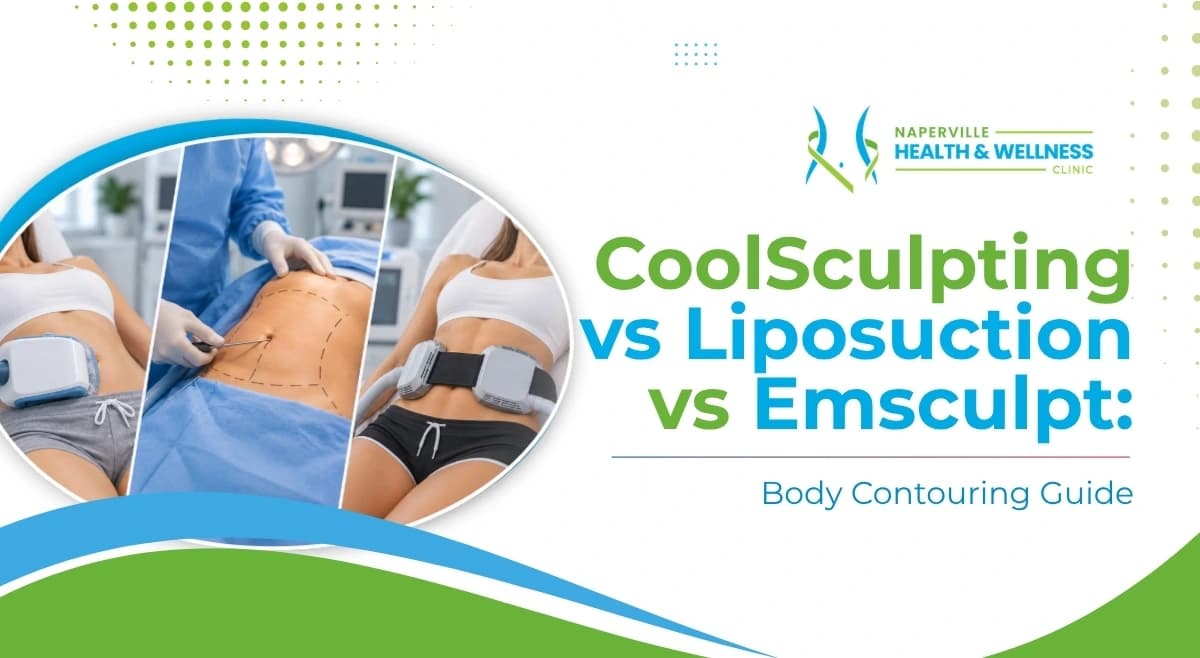
CoolSculpting vs. Liposuction vs. Emsculpt: The Naperville Body Device Guide
CoolSculpting freezes fat, liposuction removes it surgically, and Emsculpt works your muscles. Here is what the FDA and NIH actually say about results, recovery, risks, and cost, so you can pick the right option before you book.
Read MoreReady to Take the Next Step?
From medical weight loss and semaglutide to IV infusions and aesthetic treatments, our Naperville clinic offers a full range of health and wellness services built around your goals.