
If you've ever felt like you know what you "should" eat but can't make it stick, or that generic diet advice ignores everything else going on in your life, working with a nutrition coach in Naperville may be the missing piece. Here's what a whole-person, holistic approach to nutrition coaching looks like, and how it differs from a one-size-fits-all diet.
What a Nutrition Coach Does
A Naperville nutrition coach helps you build sustainable eating habits around your real life, your schedule, preferences, health history, and goals rather than handing you a rigid meal plan. It's nutrition counseling that meets you where you are, with ongoing support and accountability so changes actually last. This is the heart of medical nutrition therapy in Naperville: practical, personalized, and built to stick.
The Whole-Person, Functional Philosophy
Good nutrition coaching looks at your health as a connected whole, not a list of separate problems, the same idea behind functional and holistic medicine. The NIH's National Center for Complementary and Integrative Health describes whole person health this way, noting that diet, activity, sleep, and chronic stress are linked and can drive chronic disease across multiple body systems, while lifestyle and self-care help restore health. A holistic medicine approach in Naperville simply means addressing those together.
Looking at Root Causes
Instead of only managing a symptom, a functional approach asks what's driving it and addresses contributing factors like nutrition, stress, sleep, and movement. For many everyday concerns (fatigue, weight, low energy), those lifestyle factors are exactly where lasting change comes from. Pairing nutrition counseling with simple lab testing helps ground your plan in what's actually happening in your body.
What to Expect From Nutrition Counseling
Working with a Naperville nutrition coach usually starts with understanding your eating patterns, health history, lifestyle, and what's worked or failed before. From there, nutrition counseling in Naperville is collaborative rather than prescriptive: you build a realistic plan together, set goals you can actually meet, and check in regularly to adjust as life changes. The emphasis is on sustainable change, not a crash diet you'll abandon in three weeks. Because Naperville nutrition coaching meets you where you are, it tends to work for people who've bounced between diets without lasting results, replacing rigid rules with flexible habits you can keep for the long run.
An Honest Note on Scope
A whole-person, nutrition-focused approach is powerful for prevention and for the many issues rooted in daily habits, but it complements, not replaces, conventional medical care. Serious or persistent symptoms still need proper medical evaluation. The best results come from combining sound medical care with a strong nutrition and lifestyle foundation.
Who Benefits Most From a Nutrition Coach
Almost anyone can benefit from nutrition coaching, but it's especially valuable if you feel stuck. Maybe you've tried every diet and nothing sticks, or you're working on your weight, low energy, or simply want to eat better without overhauling your whole life overnight. Working with a nutritionist in Naperville gives you personalized guidance and steady accountability instead of generic rules from an app or article. If you've searched for a "nutrition coach near me" hoping for something more tailored than a meal-plan PDF, that's exactly the gap a real coaching relationship fills: practical support, adjusted to you, over time.
Coaching vs. a Quick-Fix Diet
The difference between nutrition coaching and the latest fad diet comes down to whether the change lasts. Restrictive diets can produce fast results, but they're built on rules that are hard to sustain, which is why the weight and the old habits so often return. A whole-person, functional approach does the opposite: it works with your preferences and your real life to build habits that survive holidays, busy weeks, and the occasional setback. It's slower and less dramatic, but it's designed for the long game and for most people, lasting results beat fast ones that don't stick.
How It Works in Practice
In practice, this is what our wellness and nutrition coaching in Naperville delivers, looking at your nutrition, movement, stress, and sleep together, and building a realistic plan you can actually follow. The goal isn't a perfect diet for a few weeks; it's a sustainable way of eating and living that supports your health for years to come.
Work With a Nutrition Coach in Naperville
Want a more connected, lasting approach to your health? Explore our wellness and nutrition coaching in Naperville, or book a consultation. You may also like our guides to the gut-brain connection, what wellness coaching is, and common blood tests in Naperville.
Call us at (877) 885-8784 to schedule your session or learn more.
Follow us on Facebook and Instagram for wellness tips, exclusive offers, and updates on our latest treatments!
FAQs
What does a nutrition coach in Naperville do?
A nutrition coach helps you build sustainable eating habits around your real life and goals, with ongoing support and accountability — not just a generic meal plan.
Is this the same as functional or holistic medicine?
It shares the philosophy: a whole-person, root-cause approach that looks at how diet, activity, sleep, and stress connect, rather than treating symptoms in isolation.
Does nutrition coaching replace medical care?
No. It complements conventional care; serious or persistent symptoms still need proper medical evaluation.
How is a nutrition coach different from a dietitian?
There's overlap, and roles vary. The shared goal is personalized, sustainable nutrition guidance built around your real life; a consultation is the best way to understand the specific support offered and whether it fits your needs.
Where do I start with nutrition coaching in Naperville?
A consultation is the simplest first step. You'll talk through your goals and history and leave with a realistic, personalized starting plan.
Related Articles
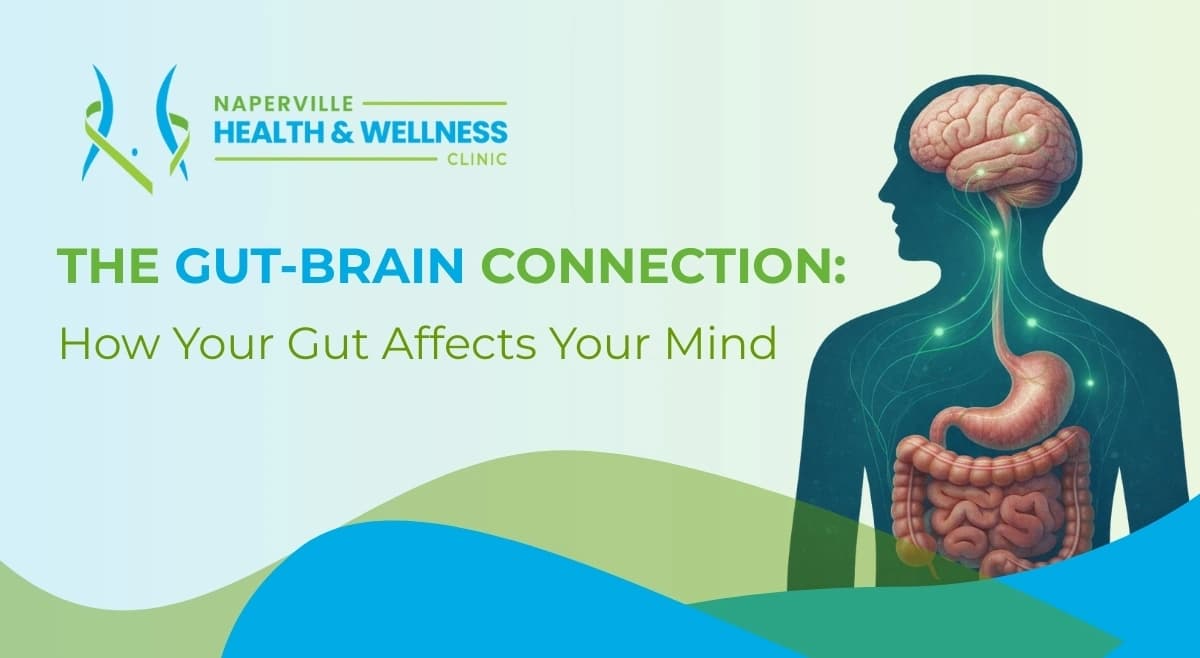
The Gut-Brain Connection: How Mental Wellness Starts with Your Health
This is an exciting and fast-growing area, and it's important to be honest about where it stands. Research suggests a strong link between gut health and mental wellness. Studies have found notable differences in gut bacteria among people with anxiety and depression. However, much of this work is still emerging. It often shows correlation rather than proven cause and requires larger human clinical trials.
Read More
What Is Wellness Coaching and How Does It Work?
Most people do not actually lack health information; they lack consistency. We inherently know we should move more, eat better, sleep enough, and lower stress. Yet, the deep gap between knowing and doing is where even the best intentions quietly fall apart.
Read MoreReady to Take the Next Step?
From medical weight loss and semaglutide to IV infusions and aesthetic treatments, our Naperville clinic offers a full range of health and wellness services built around your goals.