
When you look in the mirror, do you notice your skin looking a bit dull or "tired," despite a solid at-home routine? Perhaps you've noticed fine facial hairs catching the light, or your foundation seems to sit on top of your skin rather than blending in seamlessly.
If these concerns sound familiar, you aren't alone. Many patients come to our health and wellness centers seeking a way to hit the "reset" button on their complexion without the downtime of intense chemical peels or invasive lasers. This is where dermaplaning shines. It is a gentle, yet highly effective medical-grade exfoliation that reveals the fresh, vibrant skin hiding just beneath the surface.
Understanding Dermaplaning: More Than Just a Facial
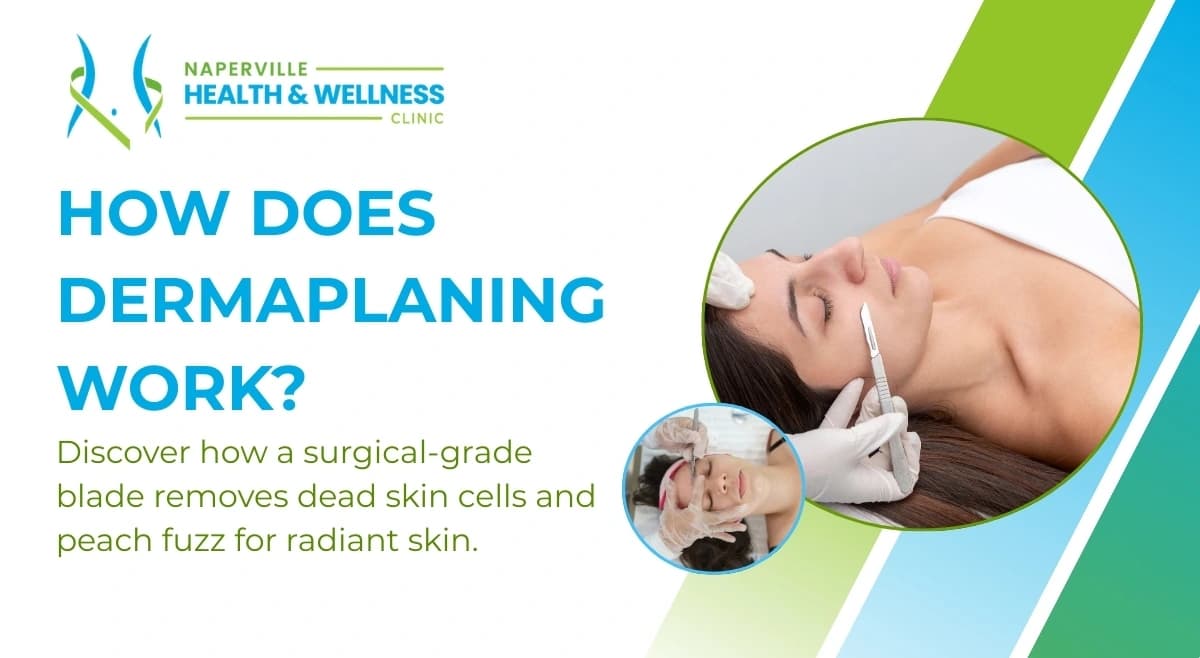
At its core, dermaplaning is a physical exfoliation procedure. A trained professional uses a sterile, surgical-grade blade (a dermatome) held at a 45-degree angle to gently scrape the surface of your skin.
How Does Dermaplaning Work?
The process removes two things: the top layer of dead skin cells (the stratum corneum) and fine vellus hair, commonly known as "peach fuzz." According to the National Institutes of Health (NIH), the skin naturally sheds dead cells, but this process can slow down due to age or environmental factors, leading to a lackluster appearance. By manually removing this buildup, we encourage the skin to appear more rejuvenated and smooth.
The Difference Between Shaving and Professional Dermaplaning
A common question we hear is, "Can’t I just do this at home with a razor?" While it may look similar, professional dermaplaning is a medical-grade treatment. Unlike a standard razor, the specialized tools used in a clinical setting allow for a deeper exfoliation that targets skin cell turnover more effectively than over-the-counter tools. According to the FDA Furthermore, having a professional perform the treatment ensures the highest standards of safety and sterilization, reducing the risk of nicks or infections.
The Benefits: Why Your Skin Will Love It
Dermaplaning has become a favorite in wellness clinics because it offers "instant gratification" with almost no recovery time.
Immediate Radiance and Texture Improvement
By removing the debris that traps oils and blocks light, your skin instantly reflects more light, giving you a natural glow. The texture feels incredibly soft to the touch, and those fine lines caused by dryness often appear diminished.
Enhanced Product Absorption
Think of your dead skin cells as a barrier. When you apply expensive serums or moisturizers, they often get stuck in that top layer. Once dermaplaning removes that barrier, your skincare products can penetrate more deeply. The FDA notes that the efficacy of topical treatments is often tied to how well the skin can absorb the active ingredients.
A Flawless Canvas for Makeup
If you wear makeup, you know how peach fuzz can cause foundation to look "cakey." By removing that fine hair, your makeup sits directly on the skin, resulting in an airbrushed finish that is difficult to achieve otherwise.
Is Dermaplaning Safe? What the Experts Say
Dermaplaning is considered a low-risk procedure when performed by a qualified professional. However, it isn't a "one size fits all" treatment.
Identifying the Right Candidates
Dermaplaning is excellent for most skin types, particularly those with dry or rough skin. It is also a fantastic option for pregnant or nursing patients who want deep exfoliation but need to avoid the harsh chemicals found in some peels, as noted in general maternal health guidelines.
When to Skip Dermaplaning (Contraindications)
We prioritize your safety above all else. You should avoid dermaplaning if you have:
Active Acne: The blade can nick a blemish, spreading bacteria and causing further inflammation.
Rosacea or Eczema: These conditions involve a compromised skin barrier that may be too sensitive for physical scraping.
Sunburn: Your skin needs time to heal from UV damage before undergoing exfoliation.
The Procedure: What to Expect During Your Visit
If you’re feeling a little nervous about a blade near your face, let us reassure you: the process is painless. Most patients describe the sensation as a light "tickle" or a gentle brushing.
Cleansing: We start with a deep cleanse to remove any oils or debris.
The Treatment: Your provider will hold your skin taut and use short, precise strokes to remove the dead skin and hair.
Soothing: We often follow the treatment with a hydrating serum or a cooling mask.
Protection: Finally, we apply a broad-spectrum sunscreen. This is the most critical step, as your "new" skin is more susceptible to sun damage.
Post-Care Tips for Lasting Results
To keep that post-treatment glow, follow these simple steps:
Sun Protection: Wear SPF 30+ daily. The CDC emphasizes that protecting new skin cells from UV rays is essential for preventing premature aging.
Hydrate: Use a gentle, fragrance-free moisturizer.
Avoid Harsh Actives: Skip the Retinol or Glycolic Acid for 48–72 hours to prevent irritation.
What Is Dermaplaning? Everything You Need to Know for Smoother, Brighter Skin
Get the glow you deserve with Dermaplaning in Naperville! Book your appointment today for smoother, brighter skin.
Schedule Now and Experience a Fresh, Radiant Complexion at Naperville Health & Wellness Clinic
Call us at (877) 885-8784 to schedule your session or learn more.
Follow us on Facebook and Instagram for wellness tips, exclusive offers, and updates on our latest treatments!
FAQs
Will my hair grow back thicker or darker?
No. This is a common myth. Dermaplaning targets vellus hair, which has a different structure than terminal hair (like the hair on your head). It will grow back with the same texture and color as before.
How often should I get dermaplaning done?
For most patients, we recommend a treatment every 4 to 6 weeks. This aligns with the natural skin cell regeneration cycle, which typically takes about a month.
Does dermaplaning hurt?
Not at all! There are no needles or "tugging." It feels similar to a very light scraping or shaving sensation.
Can I combine dermaplaning with other treatments?
Yes! It is often paired with a hydrating facial or a mild chemical peel, as the exfoliation allows the subsequent treatments to work even better.
Is there any downtime?
There is zero downtime. You might have very slight redness for an hour or two, but most patients go right back to their daily activities immediately.
Related Articles
Botox® 101: What It Is, How It Works, and What to Expect
Discover the basics of Botox® treatment, its FDA-approved uses for cosmetic and medical concerns like wrinkles, migraines, and excessive sweating. Learn what to expect during your appointment and how Botox can improve your well-being.
Read More
A Better Way to Care for Your Skin and Overall Wellness
Experience a smarter approach to skin and wellness at Naperville Health & Wellness Clinic. Learn how IPL skin rejuvenation and IV therapy work together to restore glow, hydration, and confidence.
Read More
What is "Aesthetics"? A Guide to Our Naperville Med Spa Services
Explore aesthetic treatments at our Naperville med spa to rejuvenate your skin and boost your confidence with non-invasive procedures and medical-grade skincare.
Read MoreReady to Take the Next Step?
From medical weight loss and semaglutide to IV infusions and aesthetic treatments, our Naperville clinic offers comprehensive health and wellness services tailored to your goals.